
The Instinct Here Is Not Small
Lessons From Three Years at VCET
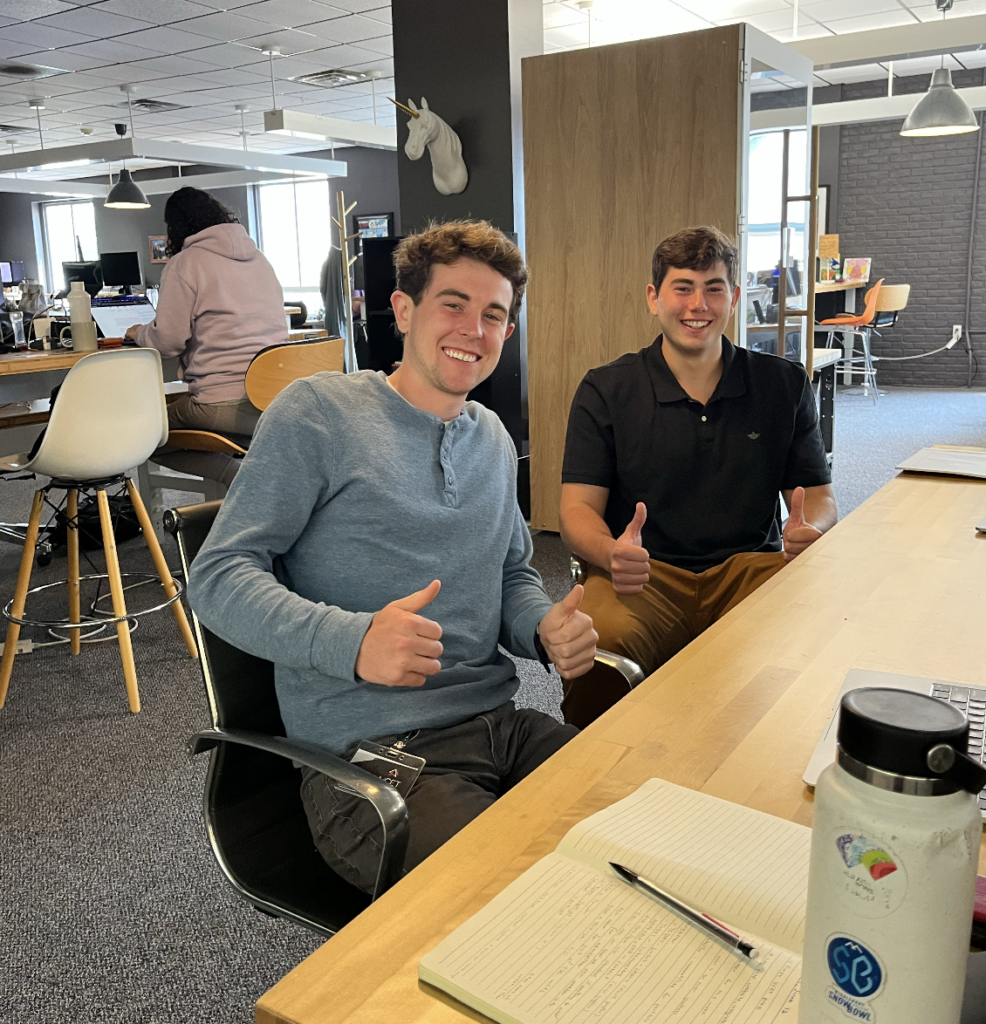
In Burlington, Vermont, an engineer codes from a hammock. Down the hall, two co-founders debate marketing strategy in a Spiderman-themed meeting room. In the corner, a pair of designers sketch out a video game. Through the kitchen windows, Lake Champlain stretches toward the horizon.
This is VCET – the Vermont Center for Emerging Technologies – and on first impression, it looks like any number of scrappy startup hubs. But spend enough time here, and something less obvious comes into focus.
I joined VCET in the summer of 2023 as a marketing intern, fresh from a Middlebury College course taught by Sam Roach-Gerber and Dave Bradbury that had piqued my curiosity about the organization. Over the next three years, I wrote 36 feature stories about the people and businesses behind VCET – portfolio companies, board members, partner organizations, coworking members.
Now, after leaving Vermont to explore new opportunities in New York, I keep returning to one conclusion: the founders building companies here are not playing a smaller game.
Ambition Is the Throughline
Vermont has 650,000 people. And yet, the companies I covered competed on national and international stages.
One Vermont battery company served clients in 44 countries across seven continents. A local manufacturer competed head-to-head with household names like Lenovo and Dell. Another company made the Inc. 5000, the annual ranking of the fastest-growing private companies in the country.
What struck me was that founders didn’t see Vermont as a limitation. They saw it as a laboratory. A marketing lead at a local data science company put it plainly: to be a pioneer in their space, they first needed to sharpen their value proposition – and Vermont, they believed, was the place to do it.
“If we can keep breaking through in this smaller market,” another founder told me, “you learn all the fundamentals in a bigger and better way.”
A biotech leader described a similar logic behind the decision to open a division here: “We want to be a global company, and our leadership said, ‘Why not start in Vermont?’ It’s a great place to incubate new ideas. We have a sustainability-minded consumer base, great talent, and Vermont has a long legacy of building great brands.”
That leader told me the decision is reinforced every day, with Vermont’s density making it unusually easy to gather data, test ideas, and hear directly from customers.
The pattern was consistent enough that I came to see it as a choice, not a circumstance. Founders weren’t building in Vermont because their ambitions were modest. They were building here because they were large.
Access Is the Advantage
In New York or San Francisco, access means proximity – to investors, to talent pipelines, to customers. Vermont offers a different kind of access: the kind that skips the gatekeepers entirely.
Instead of a generic “hello@” inbox, you get introduced directly to the decision-maker. Instead of a months-long waitlist for a business advisor, you’re sitting across from one within weeks. Instead of founders hoarding competitive intelligence, they compare notes over coffee.
I covered a group of college students who received funding to spend the summer on campus, working in research labs and trying to commercialize what they discovered. I wrote about professional associations going well beyond their mandates to connect local companies with the right people. I detailed a VCET-sponsored meetup that gathered a niche but vibrant community of hardware developers who had never had a place to convene.
My favorite story began with a casual conversation in the VCET coworking space. One member expressed curiosity about what another team was building, and asked to interview for a role. Two weeks later, he walked back into the same building with the same badge – only his desk had moved fifteen feet across the floor.
VCET sits at the center of this ecosystem. It isn’t just a physical space or a source of capital; it functions as a convener, a sounding board, and — as more than one founder described it — an emotional support system.
“Everybody is generous with their time,” one coworking member told me. “When people say ‘VCET family,’ it really does feel that way.”

What Vermont Proves
I live in New York City now. The scale here is undeniable – the capital, the talent, the ambition. But I carry something from Vermont that I didn’t expect to: a revised idea of what it takes to build something.
The founders I covered for VCET weren’t succeeding in spite of being in Vermont. Many of them were succeeding because of it – because the feedback loops are shorter, the relationships are stronger, and the ecosystem rewards people who show up and do the work.
It’s easy to assume that big companies must be built in big places. Three years of stories taught me otherwise. Ambition doesn’t need a big city to grow. It needs the right conditions — and Vermont, more quietly than most places, has been building those for a long time.
— Blaise Siefer